I haven’t yet been into the heart of the city. The Burn house is in Parklands, which is a neighborhood directly north of the city. Every morning between 7:30 and 8 we hop on the highway to head 12 miles north east to Ruiru. The factory is tucked away in an industrial park just off the main road. For the most part we travel paved roads, until we exit into Ruiru. The highway is three lanes. About once per kilometer there is a set of speed bumps. The first set is three small consecutive bumps and the second is a large (normal) speed bump. This serves two purposes- the first is to effectively maintain safe highway speeds, and the second is that these obstacles happen right before the crosswalks. Yes, there are cross walks on the highway.
Many people walk to get to work. There are large sidewalks, and even designated bike paths, though only a handful ride bikes. On the busiest parts of the highway they have built handicap accessible skywalks. Every once in a while you’ll see a motorcycle, but cars, matatus (mini buses), and large buses occupy the majority. There are motorcycle taxis (hop on the back of a motorcycle) called boda bodas which provide a fast, cheap way to get places. Roundabouts are common, and on big roads/roundabouts in bigger areas you may see (and use) the traffic lights.
There are many conveniences within walking distance of the house and the office. Diamond plaza is a popular spot with grocery, safaricom (mobile supplier), dining, fast food and shopping. The whole center is primarily run and owned by Indian people, which also make up most of the Parklands community. On the 4th floor is a large beautiful yoga studio that offers over 30 classes per week. It’s run through the Africa Yoga Project which is an incredible initiative to empower people in Africa. (www.africayogaproject.org). I’ve been told there is a climbing gym in Diamond plaza as well but haven’t yet tried it out. I injured my wrist last week due to poor ergonomics, and am babying it this week before trying anything new.
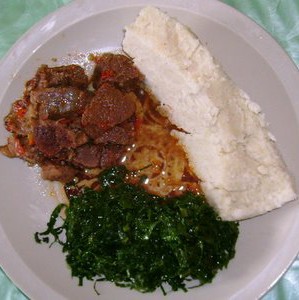
Everyone warns us (Jeff and I) about the lackluster qualities of Kenyan food. The problem is I’m just too curious. Jeff arrived one week before me and is fulfilling the second half of a leadership program which places mid-career professionals in international companies. While the remainder of our house is desensitized to the food and cultural differences, we are still exploring. Last Friday we ventured out to our first Kenyan lunch. We walk from the factory to a small place called Ridge’s Butchery. It is exactly that, a butchery. However, behind the butchering there is a small, dark area set up with two long tables and several chairs. There’s a sink mounted to the wall with a useless faucet and a tank of water perched on the side. There are two large caged windows. Behind one, a man cooking something, and behind the other a large vat of boiling tea. We sit down, clueless, waiting for someone to come to us. The chef, walks up to a small hole in the mesh, and nods at us. We stand up, and ask for food. He says, “Meat, ugali. Meat, and ugali.” We nod yes, and sit back down. He takes a plate and dishes one ladle of meat stew, and one spoonful of sukuma (“super fried kale” in the words of Chris). On another plate he shaves off three solid portions of a large fat “cake” of ugali. He repeats the process and then brings the plates to us.
Ugali is steamed maize, similar to idli or cream of wheat, though more solid and pliable in texture. The meat is goat or beef, and the selection includes one bone, and mostly gristle. Hungry, we dig in. Though plain, it’s delicious. We pay 200ksh (~$2.27) for two meals, wash our hands, and leave. I guess we’ll have to wait 24hrs to find out how successful we were. On the way back we buy some mangos and watermelon slices to sweeten our palettes.
Maybe it is the warm familiarity of Africa, or the pleasure of new experiences, but it seems being homesick fades much quicker this time.
 I See Pride